Choosing Colloidal Silica for Refractory Castables
Two castables can use colloidal silica and still behave very differently. Particle size, solids content, binder dosage, and the rest of the formulation all influence placement, strength, and drying. The right choice begins with the requirements of the complete castable.


Particle Size Affects More Than Bonding
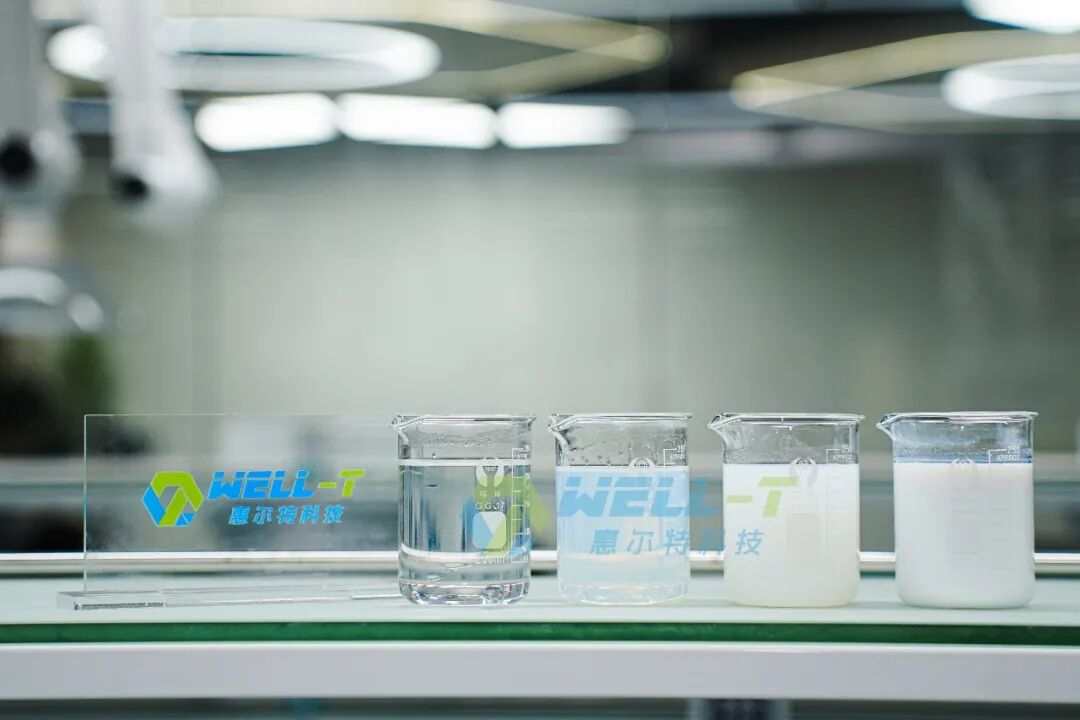
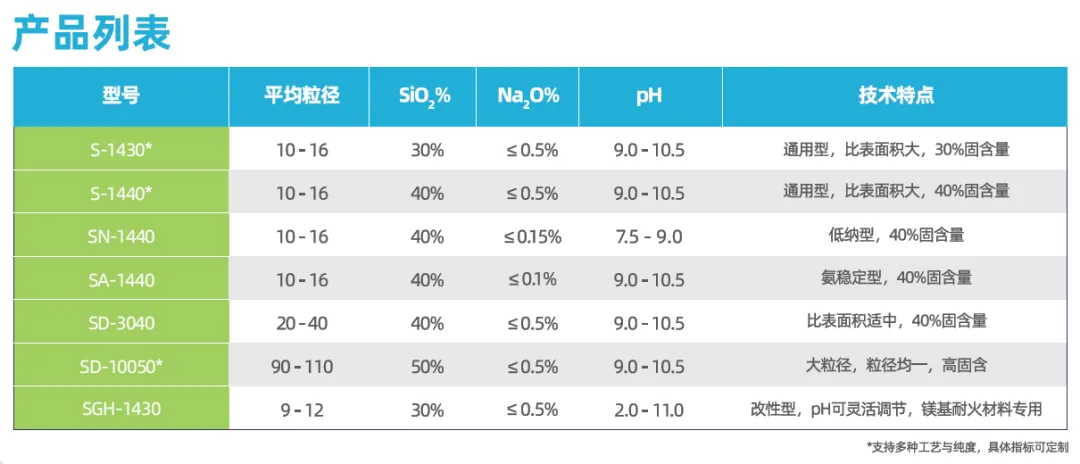
Smaller silica particles provide more surface area for a given mass. That can increase the number of potential connections in the binder network, but it also changes interactions with water and other particles.
A finer grade is therefore not automatically the best option. If the formulation becomes too viscous, the benefits may be offset by poorer mixing or placement. Particle size should be assessed together with the castable's fines and aggregate distribution.
Solids Content Changes the Water Balance
At the same dry silica dosage, a more concentrated sol introduces less water. This can help manage drying demand and the pore structure left behind as water is removed.
For example, supplying 3 kg of dry silica requires 10 kg of a 30% sol, which carries 7 kg of water. A 40% sol supplies the same silica in 7.5 kg of product, carrying 4.5 kg of water. The remaining formulation must be adjusted to make a fair comparison.
Higher concentration can also affect viscosity and handling. The useful target is the water balance and workability required by the castable, rather than the highest available solids content.
More Binder Does Not Always Mean Better Performance
Research on colloidal silica castables highlights the importance of porosity and particle packing. Simply increasing binder addition can change water demand and leave an unfavorable pore structure, affecting mechanical properties and corrosion resistance.
A trial should therefore consider binder dosage alongside the distribution of coarse aggregates, fines, and ultrafine particles. Strength, permeability, drying behavior, and service requirements need to be evaluated together.
WELL-T Application Support
WELL-T offers a range of particle sizes, solids contents, and stabilizing systems. Drawing on nearly 30 years of colloidal silica experience, the company works with customers to identify a suitable starting point and refine it through application testing.
References
M.R. Ismael, R. Salomão, and V.C. Pandolfelli. "Optimization of the Particle Size Distribution of Colloidal Silica Containing Refractory Castables." Interceram, Refractories Manual (2007).