How Colloidal Silica Helps Build Stronger Concrete
Colloidal silica can help produce stronger, more durable concrete—but it can also make fresh mixes harder to handle. Understanding how it affects workability and cement hydration helps producers choose the right product and balance performance with practicality.
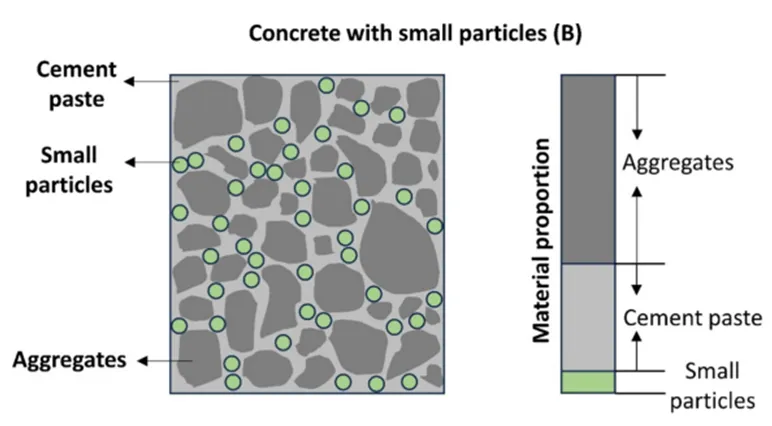

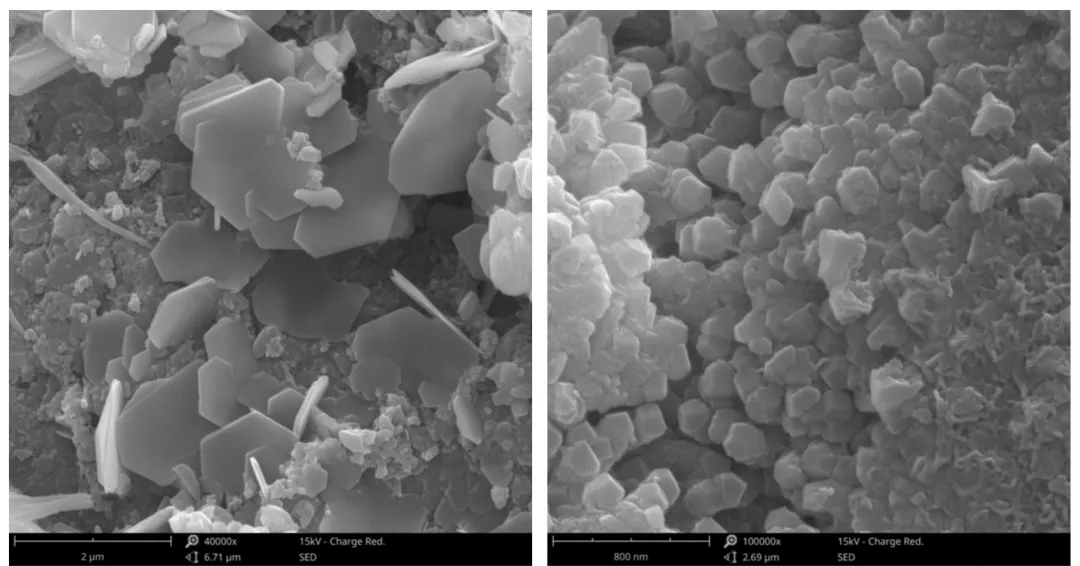
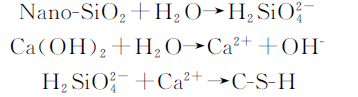
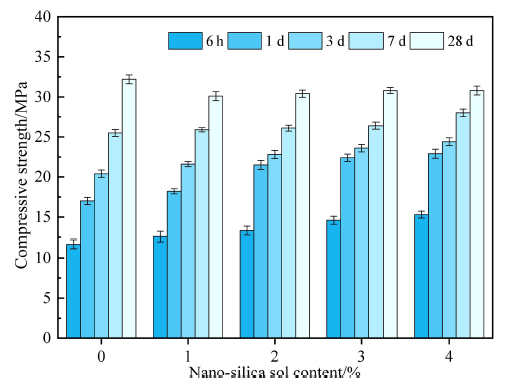
That tradeoff comes down to what its tiny silica particles do inside the cement paste. Their large surface area changes how the fresh mix behaves, while their physical and chemical activity helps build a denser structure as the concrete hardens.
Small Particles with a Large Surface Area
Colloidal silica consists of extremely fine silica particles dispersed in water. Splitting a material into smaller particles exposes more surface area—a little like the difference between a solid block and the same material broken into fine grains.
All that extra surface needs to be wetted. Even when the total water content stays the same, adding colloidal silica can leave the mix feeling stiffer and less free-flowing.
For concrete producers, this makes the choice and dosage of water-reducing admixture especially important. The aim is to achieve the required workability while maintaining the intended mix proportions.
Helping the Cement Develop Its Binding Structure
Concrete gains strength through hydration: the chemical reactions between cement and water. These reactions produce solid material that gradually binds the mixture together.
One of the most important products is calcium silicate hydrate, or C-S-H. Think of it as the binding material within the hardened cement paste. Research on cement hydration describes how this structure develops as cement reacts with water.
Colloidal silica helps this process in two related ways.
Early on, it provides additional sites where hydration products can begin to form. These starting points can help the binding structure develop more quickly throughout the paste.
It also participates in a chemical reaction. Silica reacts with calcium hydroxide released during cement hydration, forming additional C-S-H. This is called a pozzolanic reaction. In practical terms, it produces more of the material that helps bind the cement paste together.
Why a Denser Structure Matters
Hardened cement paste contains microscopic pores. Their size and arrangement influence how the material performs.
As additional binding material forms, it can fill some of these spaces and refine the pore structure. In the study cited here, researchers found that colloidal silica reduced pore volume and pore size, alongside improvements in strength and durability. They identified early nucleation and later pozzolanic activity as contributing mechanisms.
Choosing the Right Product for the Mix
The benefits depend on the formulation. Colloidal silica type, dosage, dispersion, cement chemistry, and admixture compatibility all affect the result.
A useful trial therefore looks beyond compressive strength. It also checks whether the concrete remains workable enough for its intended placement and whether the hardened material meets the project's durability requirements.
WELL-T brings nearly 30 years of colloidal silica experience to this selection process. Its range includes different particle sizes, surface modifications, and stabilizing systems, supported by application testing to help customers identify a suitable grade for their cement and admixture combination.
References
J.J. Chen, P.L. Ng, L. Xu, and A.K.H. Kwan. "Use of Nano-Silica Sol in Concrete: Performance and Influence Mechanisms." Construction and Building Materials, 411 (2024), 134582. https://doi.org/10.1016/j.conbuildmat.2023.134582
Additional background on cement hydration: https://www.nist.gov/system/files/documents/2017/04/28/Bullard_MSMSE_2010.pdf