How Aluminum-Modified Colloidal Silica Can Help Concrete Retain Workability
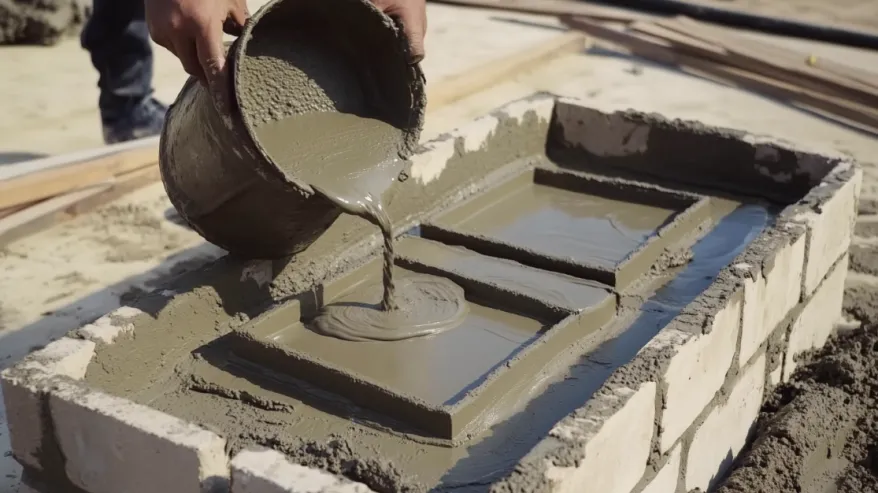
Concrete must stay workable through transport, waiting, and placement. Aluminum modification changes the surface of colloidal silica particles and can help reduce workability loss in selected mixes. A published patent comparison shows why surface chemistry deserves attention alongside particle size.
A Comparison at Similar Particle Specifications
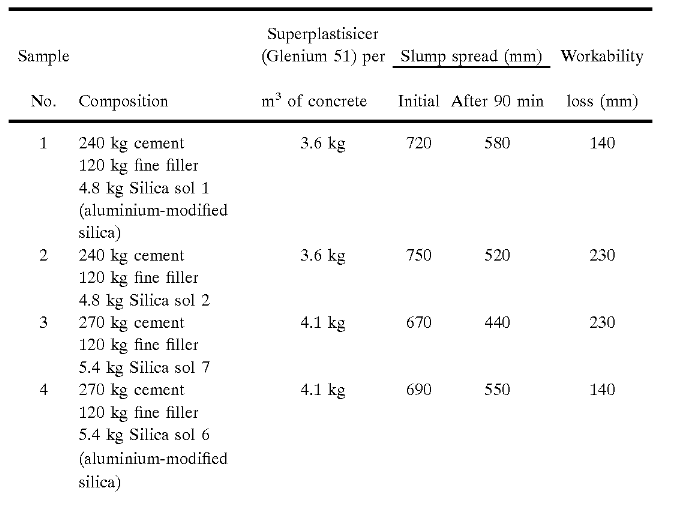
Patent US6800130B2 compared two silica sols with the same specific surface area of 220 m²/g and 30% silica solids. One was aluminum-modified. The compared concrete mixes used the same cement, filler, silica-sol dosage, and superplasticizer dosage.
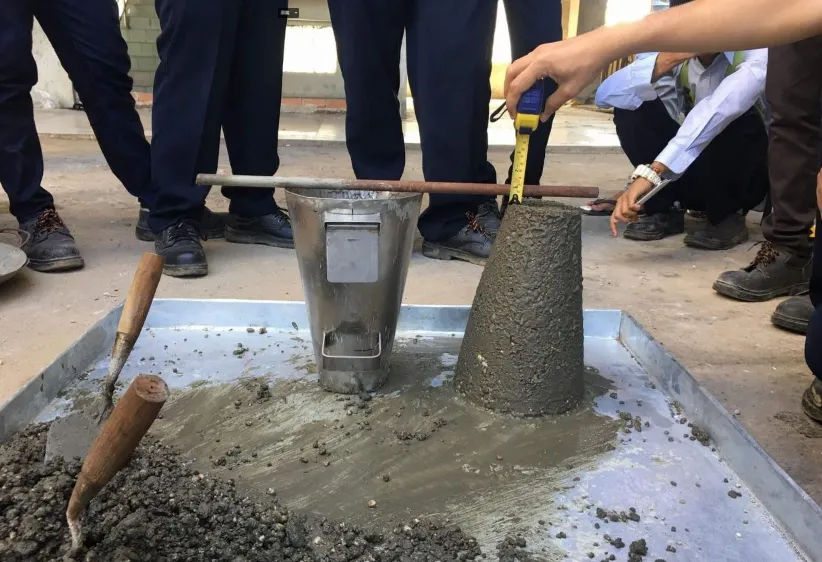
The conventional grade's spread decreased from 670 mm initially to 440 mm after 90 minutes, a loss of 230 mm. The modified grade decreased from 690 mm to 550 mm, a loss of 140 mm. The latter loss was approximately 39% smaller.
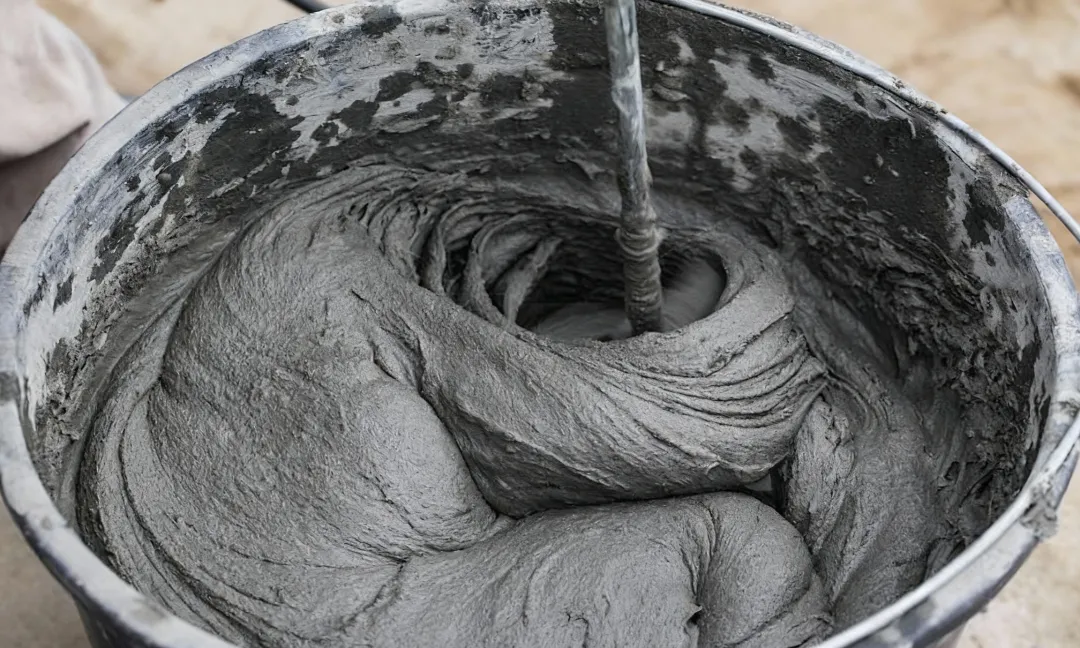
These are spread measurements: how far the concrete flows after the test cone is removed. They illustrate a benefit in the tested mix, rather than a guaranteed improvement for every concrete formulation.
Why the Cement Environment Matters
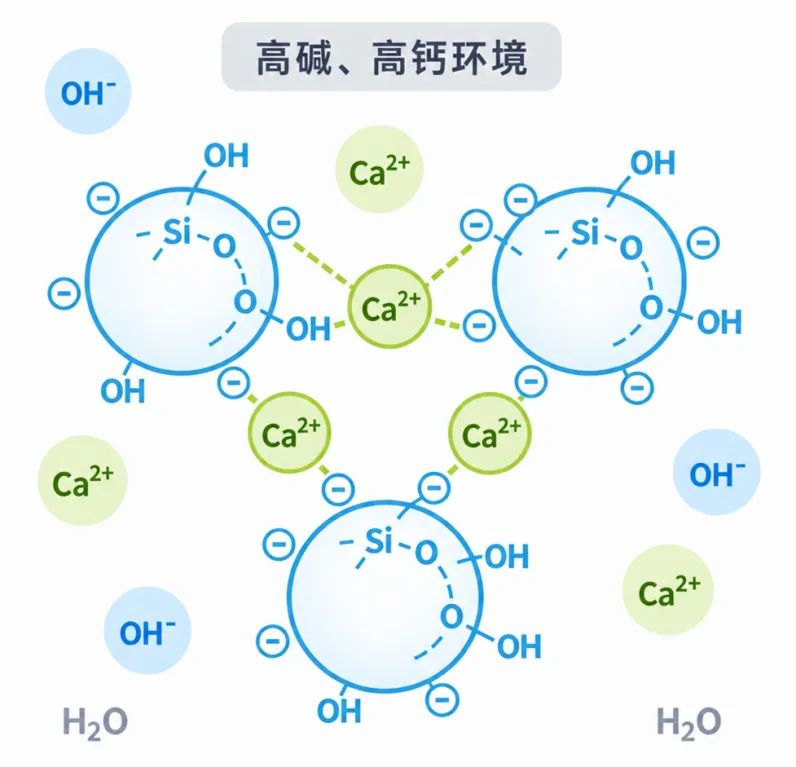
A stable silica sol enters a very different environment when it is mixed into cement paste. High alkalinity and dissolved ions, including calcium, can change the interactions between particles and promote aggregation.
Superplasticizers help maintain dispersion, but their performance depends on interactions with both cement and silica surfaces. This helps explain why stability in the original container does not necessarily predict behavior after mixing.
What Aluminum Modification Changes
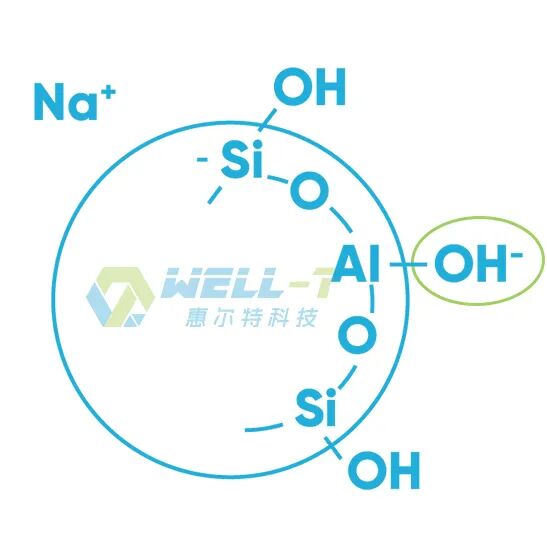
Aluminum modification introduces aluminosilicate sites at the particle surface and changes its charge characteristics. This can alter interactions with ions and admixtures. The patent's workability results support evaluating the modified surface as a formulation variable; the precise mechanism in a customer's mix needs separate assessment.
From Published Results to Application Trials
The patent also reports favorable strength comparisons, although these involve separate mixes and should not be treated as a universal guarantee of unchanged strength. A practical trial should measure workability retention and hardened properties together.
WELL-T's SGA series of aluminum-modified colloidal silica provides another option for concrete formulations. The company can support selection and compatibility testing with the customer's cement, admixtures, and mix design.
References
P. Greenwood, H. Bergqvist, and U. Skarp. Construction Material. US6800130B2 (2004). https://patents.google.com/patent/US6800130B2/en
D. Hendrix and K. Wille. "Stabilizing Dispersed Colloidal Nanosilica Exposed to an Ultra-High Performance Concrete Environment." Construction and Building Materials, 409 (2023), 133975. https://doi.org/10.1016/j.conbuildmat.2023.133975
R.K. Iler. "The Effect of Surface Aluminosilicate Ions on the Properties of Colloidal Silica." Journal of Colloid and Interface Science, 55(1) (1976), 25–34. https://doi.org/10.1016/0021-9797(76)90005-9